INTERPRETATION RISK: THE NEW CENTER OF GRAVITY IN JOINT OPERATIONS

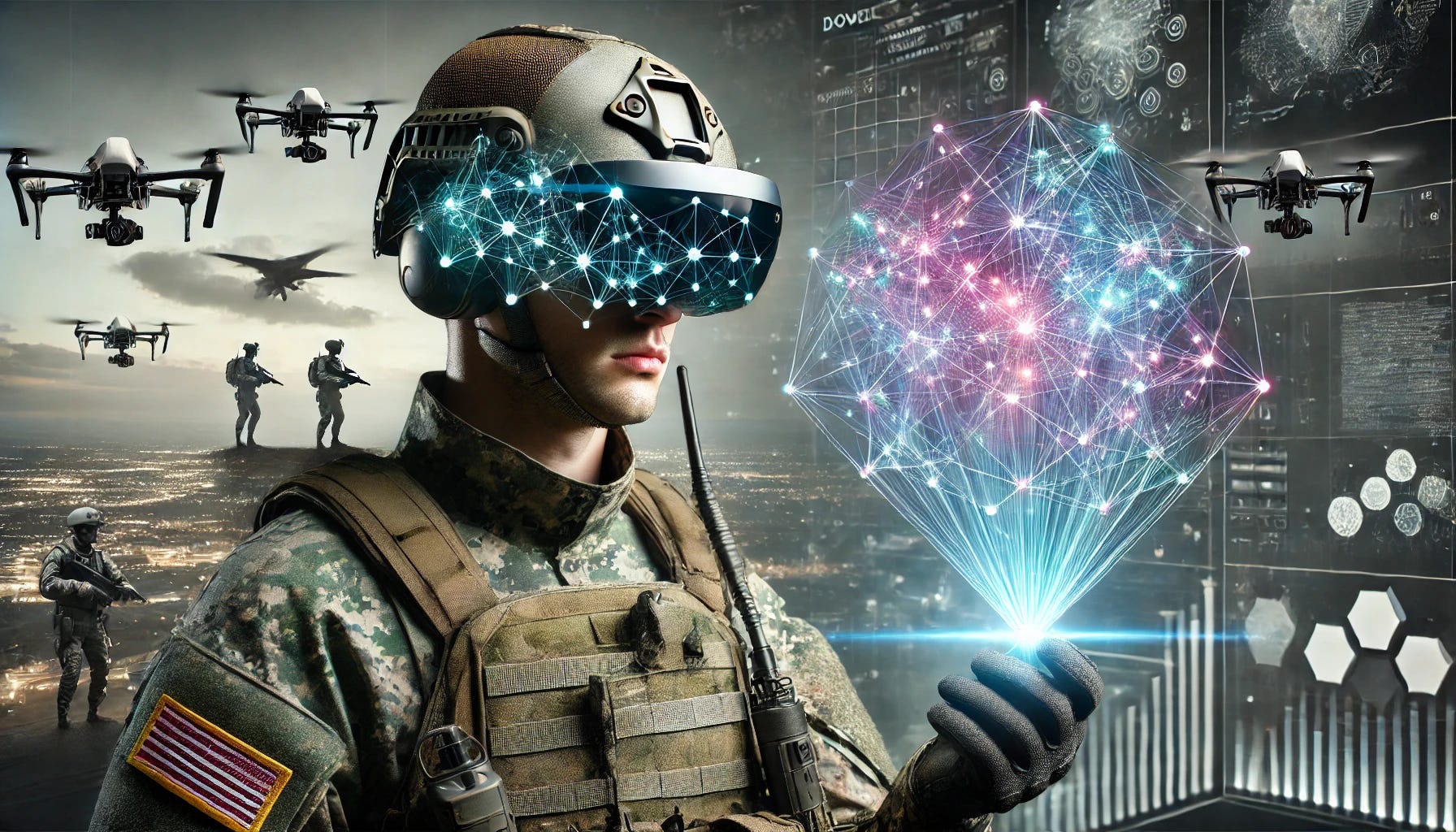
The next operational failure won’t come from bad data or bad sensors.
It’ll come from a fractured interpretation layer.
Every commander already feels this.
You can have flawless ISR, perfect fusion, pristine feeds - and still make the wrong call if the force isn’t interpreting the world the same way.
The next decisive vulnerability isn’t informational.
It’s interpretive.
1. Defining Interpretation Risk
Interpretation risk is the operational danger that emerges when units, staffs, or systems assign different meanings to the same inputs.
It’s the failure mode upstream of every other failure mode.
It’s not about:
lack of data
bad models
weak sensors
clogged comms
It’s about the cognitive architecture that sits between information and action.
Interpretation risk occurs when:
two teams see the same picture but come to different conclusions
AI systems generate meaning humans don’t share
operators read fused data through divergent mental models
mission partners cannot maintain a common cognitive frame
This isn’t a human problem or a machine problem.
It’s a joint force problem - and it’s already here.
2. Naming the Drift
In every major operation, there is a point where the force stops sharing the same mental map.
That’s interpretation drift.
It shows up as:
hesitations in the decision loop
inconsistent reporting
divergent assessments from different cells
misalignment between human intuition and machine outputs
“ghost friction” that leadership can feel but can’t diagnose
Drift is subtle at first - a half-degree misalignment.
But compound that misalignment across:
components
echelons
AI systems
timelines
threat environments
…and you get operational incoherence.
The mission doesn’t break because someone disobeyed.
It breaks because everyone interpreted differently.
That’s the drift commanders have been sensing for years but couldn’t name.
Now it has a name.
3. Why AI Accelerates Divergence
AI doesn’t create interpretation risk.
It amplifies it.
Because AI systems no longer deliver data -
they deliver pre-structured meaning.
AI:
filters
prioritizes
categorizes
frames
compresses
decides what is signal vs noise
All before a human ever sees anything.
But here’s the operational problem:
Humans and AI do not interpret the world using the same architecture.
AI’s meaning structure is:
statistical
pattern-driven
decontextualized
correlation-led
hyper-literal
Human meaning structure is:
narrative
experiential
context-driven
threat-weighted
culturally coded
The divergence between those two interpretive systems is widening.
And because commanders rely on both human intuition and machine outputs, they’re often merging two incompatible frames into one decision.
That is where the next operational failure lives.
4. How Misaligned Meaning Breaks Command
Command authority rests on one non-negotiable foundation:
a shared cognitive picture.
Not a shared dashboard.
Not a shared feed.
Not a shared COP.
A shared interpretation of what’s happening.
When the interpretive layer fractures:
timing slips
intent blurs
risk is assessed inconsistently
authorities are misapplied
responses desynchronize
decision superiority collapses upstream
This is how:
perfect intel leads to bad decisions
fused ISR still results in delays
AI-augmented operations drift out of sync
command intent gets “translated” differently at each echelon
Command doesn’t fail when people disobey.
Command fails when people interpret differently.
And in an environment mediated by AI systems, that divergence accelerates.
5. The Shared Cognitive Picture: The New Operational Imperative
The shared cognitive picture is no longer a luxury.
It’s the new center of gravity in Joint Operations.
It requires:
aligned meaning structures across humans and AI
a common interpretive framework for multi-domain operations
doctrinal language that defines frames, not just data
training that teaches commanders how to detect drift early
a new set of readiness metrics built around cognitive integrity
Because in the AI era, the question is no longer:
“Do we have the information?”
It’s:
“Do we interpret the information the same way long enough to act coherently?”
That is the battlefield now.
Close
If we don’t harden the meaning architecture,
every technology advantage we build downstream collapses upstream.
The decisive domain is cognitive.
The center of gravity is interpretation.
The future of Joint Operations will be won or lost long before the first shot -
in the layer where meaning is.
