Explainability as a Post-Hoc Control Illusion

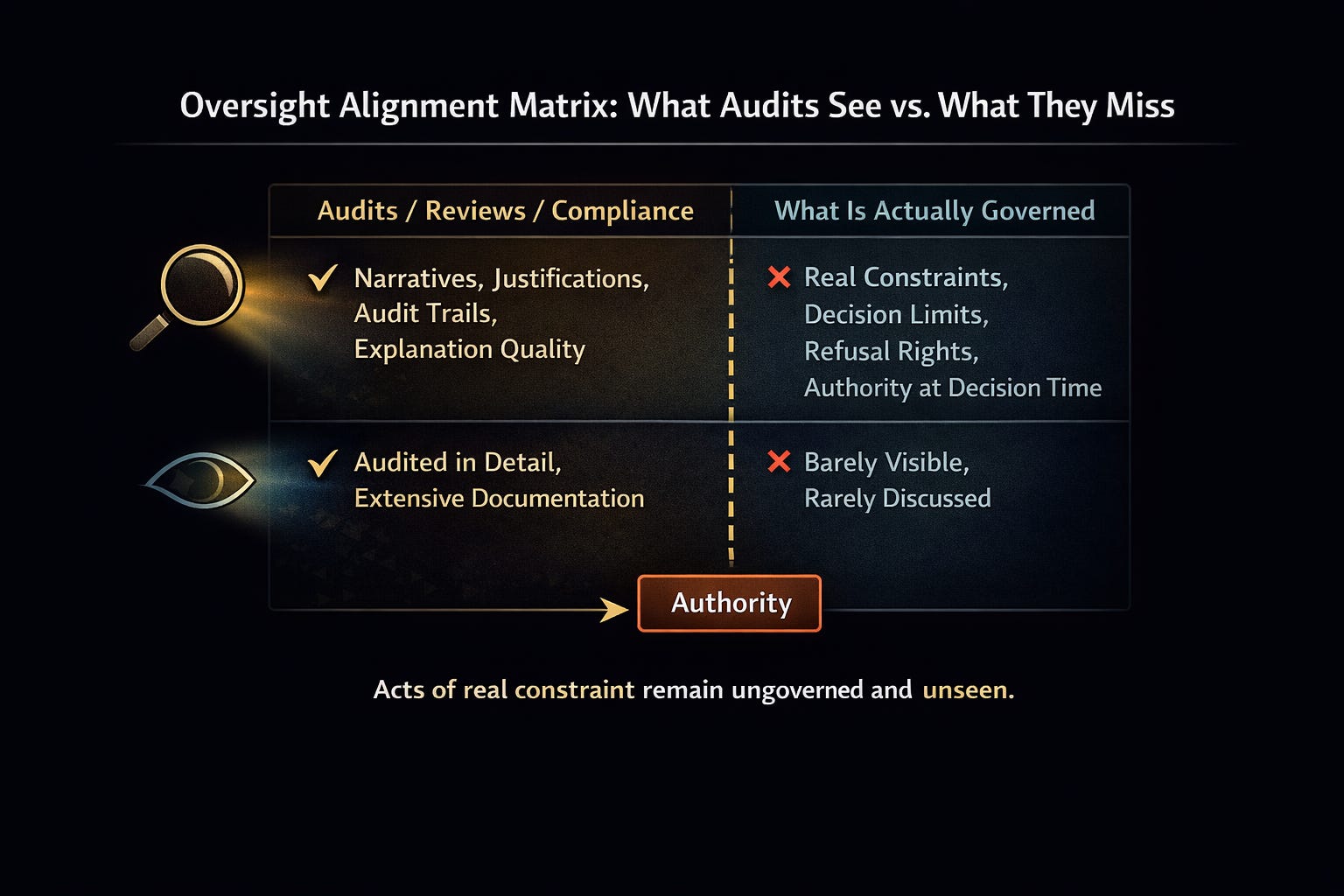
Explainability is not control.
And in AI-accelerated decision systems, treating it as such is quietly dangerous.
We’ve come to rely on post-hoc explanations as proof that AI decisions are governed. They’re legible. They’re auditable. They’re reassuring.
They also arrive after authority has already been exercised.
In this paper, I lay out why explainability has become a proxy for governance - and how that substitution creates a Post-Hoc Control Illusion: the belief that because a decision can be explained, it must have been controlled.
I walk through the mechanism, why audits and compliance frameworks reward it, how temporal compression makes it inevitable, and how explainability - combined with ISR fusion - can actually amplify interpretive drift rather than contain it.
This isn’t a call for better explanations.
It’s a call to re-time control.
If control doesn’t exist before or during execution, it isn’t control at all - no matter how good the narrative sounds afterward.