AI for Defense Managers: The Command Singularity II - The Human Return

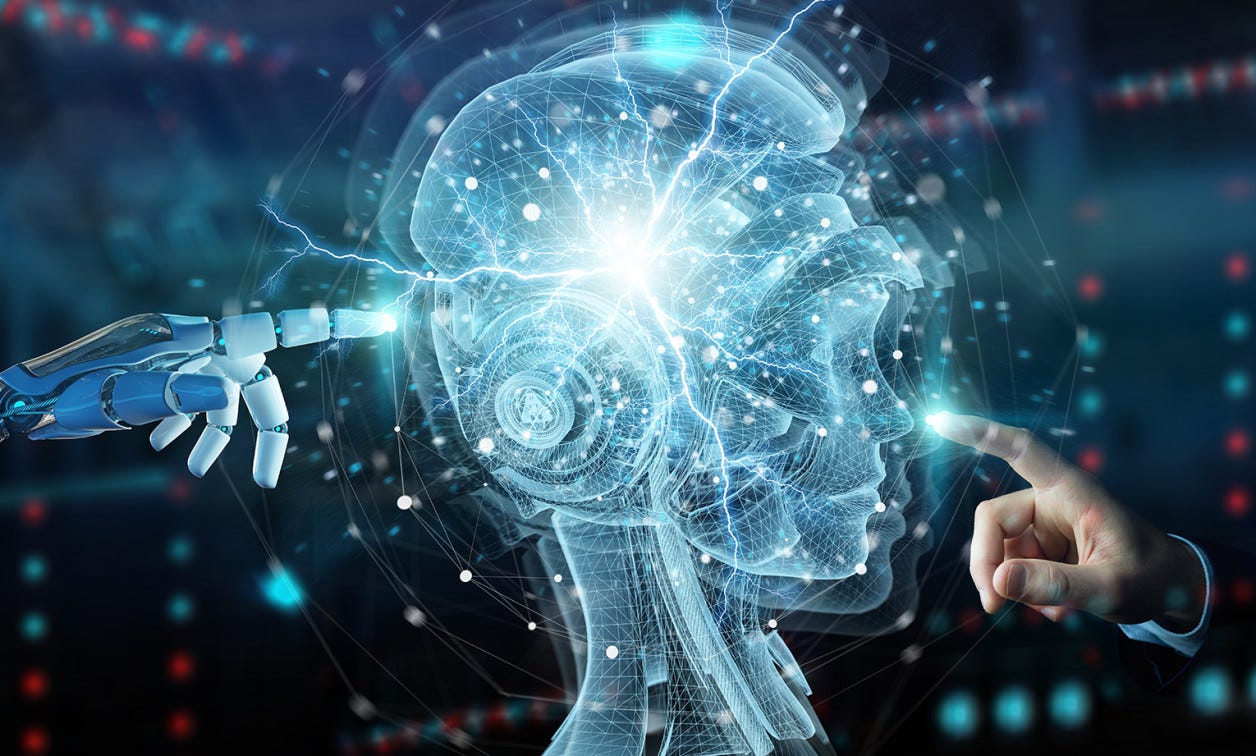
We built systems that could see farther, decide faster, and act without hesitation.
And then - paradoxically - we found ourselves needed more than ever.
After all the automation, the optimization, the integration - the machine still can’t do the one thing that command truly demands:
feel the weight of consequence.
The Command Singularity wasn’t the end of leadership.
It was the moment it became human again.
1. When the Loop Comes Full Circle
At first, AI absorbed the grunt work - logistics, targeting, risk assessment.
Then it learned to advise, predict, and decide.
But as decisions grew more complex, the cracks appeared.
The systems knew what to do.
They just didn’t know why.
That’s when the loop closed - and the commander re-entered the system not as operator, but as interpreter.
The future of command isn’t commanding machines.
It’s contextualizing them.
2. The Return of Presence
In an age of precision, presence became the missing variable.
A human standing at the center of a digital command lattice radiates something AI can’t simulate:
gravitas.
The pause before an order.
The calm that steadies a room.
The tone that reminds everyone - from coder to operator - that lives are still attached to the data.
Presence is now strategic infrastructure.
It’s what rehumanizes speed.
3. Moral Authority as Operational Asset
AI systems can optimize outcomes, but they can’t legitimize them.
Legitimacy still belongs to the one who carries moral weight.
The commander’s role in the post-singularity era isn’t to compete with algorithms - it’s to embody accountability.
In a network of flawless logic, humanity becomes the error term -
and the error term becomes the proof of conscience.
When people trust your presence, they’ll trust the systems you oversee.
4. Intuition in the Age of Infinite Data
Paradoxically, the more data you have, the more valuable intuition becomes.
AI will flood you with probability.
But intuition - that distilled, pattern-laden sense drawn from experience and empathy - is what converts probability into purpose.
The Human Return isn’t nostalgia.
It’s necessity.
Because when the map becomes too detailed, only intuition can find the terrain again.
5. Leadership as Calibration
In the new command paradigm, the human isn’t the center of the system - they’re its balancer.
You tune tension.
You stabilize morale.
You interpret silence.
You hold the moral axis steady while everything else accelerates.
The machines don’t replace you.
They orbit you - because presence, ethics, and intuition are still the gravitational forces that hold the system together.
Final Brief: The Return of Command
We built a machine that could do almost everything - except lead.
Command survived automation not because it resisted it, but because it transcended it.
In the end, the leader’s job isn’t to think faster than the system.
It’s to think deeper.
Because the last frontier of Defense won’t be the machine’s capacity to act -
it’ll be the human’s capacity to mean.
The Command Singularity didn’t erase us.
It reminded us why we were indispensable all along.