AI Command Readiness: A Field Guide for Defense Managers
Part V - Human Sovereignty at Scale: Designing Control Systems That Protect Judgment, Not Replace It

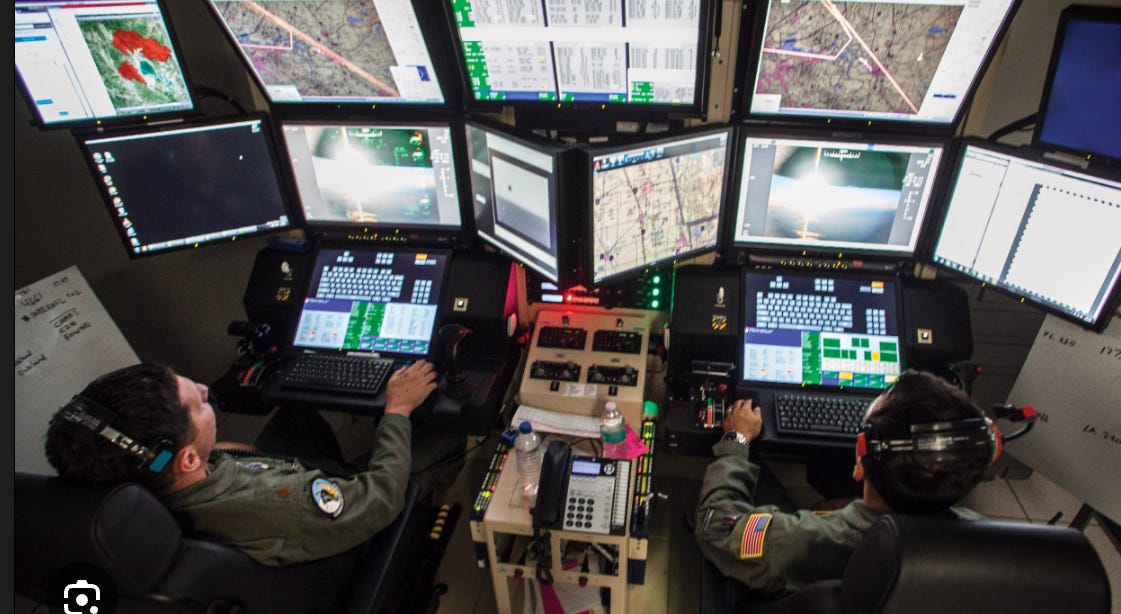
The final test of command isn’t how powerful your systems are.
It’s whether you still matter when they’re running at full speed.
AI has given defense leaders an unprecedented advantage-real-time situational awareness, predictive precision, and autonomous capability that once belonged in science fiction. But those same systems carry a hidden cost: the gradual erosion of human sovereignty.
The mission now is clear-build architectures that keep humans decisive inside systems that no longer need permission to act.
1. The Myth of Perfect Autonomy
Total autonomy sounds efficient until you realize it amputates accountability.
An AI that executes flawlessly but operates beyond explanation is a liability, not a force multiplier.
The goal isn’t to eliminate human friction-it’s to design friction with intent.
Every pause, review gate, and override isn’t bureaucracy-it’s ballast. It keeps moral, tactical, and contextual weight tethered to the decision.
Autonomy without anchoring becomes drift.
And drift in defense doesn’t lead to innovation-it leads to escalation.
2. Command by Proxy Is Still Command
When humans delegate judgment to machines, the responsibility doesn’t disappear-it transfers.
Defense managers must reject the comfort of “the system made the call.”
The system never makes the call. It suggests one. Humans decide whether that suggestion becomes action.
That means every AI deployment should include an explicit sovereignty clause:
“A human must remain the final authority on any action that alters human safety, national posture, or operational legality.”
That clause isn’t a slogan-it’s a design requirement.
3. Embedding Judgment in Architecture
To preserve human sovereignty, judgment can’t be an afterthought-it must be engineered in.
Key principles:
Interruptibility: Humans must be able to pause or redirect any automated process without delay or retaliation from the system logic.
Explain-back: Systems must justify critical outputs in human-readable form within operational tempo.
Ethical telemetry: Every autonomous action should log not only what happened, but why it was deemed permissible.
These aren’t UX niceties-they’re defense-grade guardrails.
4. Scaling Human Authority
The biggest misconception in AI command is that human oversight can’t scale. It can-if you architect for hierarchical clarity instead of bureaucratic clutter.
Create distributed sovereignty: layers of trained interpreters who each understand their system’s decision boundaries and escalation triggers.
It’s not “one human in the loop.” It’s a network of discernment.
A structure where expertise, context, and moral authority cascade efficiently without dissolving into algorithmic anonymity.
5. Culture as Code
Even the best control frameworks fail if the culture underneath them rewards speed over sense.
Sovereignty at scale isn’t just technical-it’s cultural.
It depends on leaders modeling ethical composure under acceleration:
Reward pause, not just precision.
Normalize questions, not just compliance.
Value traceability as much as accuracy.
In the AI era, the command climate is the safety system.
6. The Future of Authority
The most advanced defense systems of the 2030s won’t be defined by autonomy-they’ll be defined by alignment with human command intent.
That’s the true measure of superiority: machines that amplify judgment without diluting responsibility.
AI that extends human reach without muting human reason.
Because the ultimate national asset isn’t computational power.
It’s the moral clarity of the people authorized to use it.
Final Transmission
Human sovereignty is not nostalgia-it’s the last firewall.
The question for defense leadership is no longer, “Can machines make decisions?”
It’s, “Can we still recognize ourselves in the decisions they make?”
Command readiness in the age of AI ends where it began-with human judgment, steady under pressure, unwilling to outsource its conscience.
Hold the line.
Because clarity is control.
TL;DR: Autonomy must serve authority, not erase it.
Build systems that keep humans decisive, traceable, and morally accountable-because when sovereignty scales, civilization stays intact.