A Cognitive Architecture for Command and Control in AI-Enabled Operations

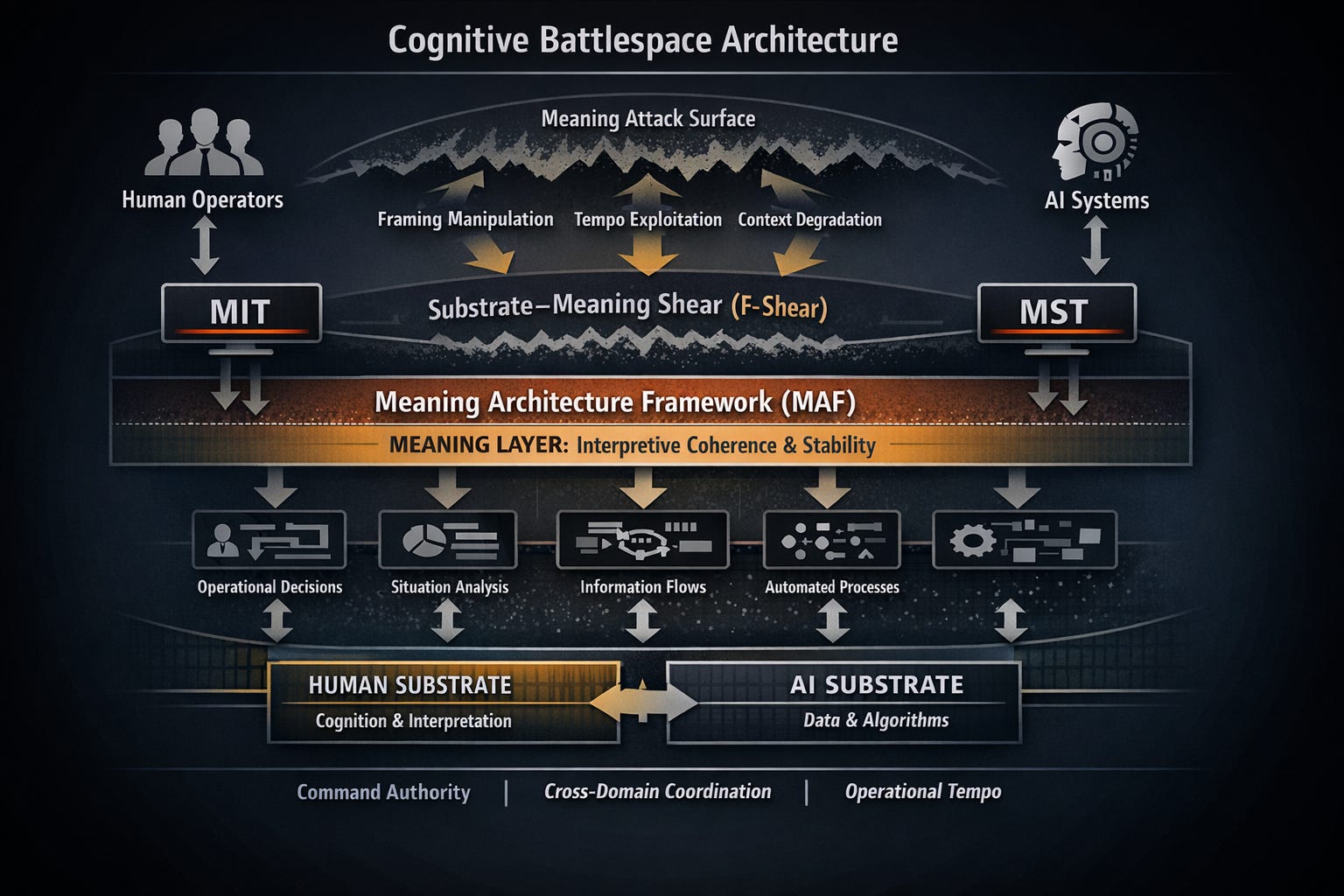
Every command knows how to protect networks.
Every command knows how to protect data.
Almost no command knows how to protect meaning.
In AI-enabled operations, systems can be compliant, explainable, and functioning exactly as designed - and command can still fail.
This paper, Meaning Is the Battlespace, introduces Meaning Architecture: a doctrine-level approach to making interpretation observable, governable, and defensible in real time. It reframes command risk away from tools and ethics alone and toward the meaning layer - where intent, context, tempo, and trust actually determine whether decisions cohere or collapse.
The paper presents:
- operational thresholds for meaning stability
- models of how human–machine interpretation diverges under tempo
- early warning indicators of meaning failure
- command interventions that work before collapse
- and a future view of command as interpretive governance in an AI-native battlespace
This is not an AI ethics paper.
It’s not a policy memo.
It’s a command architecture for a world where speed is cheap, but meaning is fragile.
If AI is accelerating faster than doctrine, then meaning - not compute - is now the limiting factor of command.